

Dr. David Fajgenbaum: Wie ein Arzt Hoffnung in Taten umsetzte, um seine eigene seltene Krankheit zu behandeln
Dr. David Fajgenbaum was in his third year of medical school when a rare and mysterious illness derailed his plans. Crushing fatigue, abdominal pain, and multiple swollen lymph nodes progressed rapidly, and he found himself in the ICU with multiple system organ failure. Recovering from the brink of death, he was diagnosed with Castleman disease (CD), a rare condition that at the time was thought to be a lymph node disease with similarities to cancer.

Changemaker bei Rare: Becca Salky
At age 15, Becca Salky became her own medical detective, playing a key role in uncovering her diagnosis. Now, as a Clinical Research Coordinator at Massachusetts General Hospital, she focuses on spreading awareness about MOG, finding better diagnostic tools, leading clinical trials, and fighting gender disparity.

Organisation im Fokus: ANGEL AID CARES
ANGEL AID supports rare families and offers relief services to caregivers through sustainable health and wellness training, transformative retreats, and a globally connective mother-to-mother network.

Unter der Oberfläche: Wie der Dermatologe Dr. Prince Adotama unsere Sichtweise auf seltene Krankheiten und unsere Haut verändert
When it comes to complex, rare diseases, most people don’t think “dermatology.” But they should, says Prince Adotama, MD, a board-certified dermatologist and faculty member at NYU. Dr. Adotama specializes in skin of color care and skin autoimmune disorders, including rare bullous disorders.

Organisation im Fokus: Die Cure Mito Foundation
The Cure Mito Foundation is a volunteer-run foundation dedicated to advancing education and research for Leigh syndrome and mitochondrial disease.

Organisation im Fokus: Die United Mitochondrial Disease Foundation
For over 25 years, the United Mitochondrial Disease Foundation (UMDF) has worked to promote research and education for the diagnosis, treatment and cure of mitochondrial disorder while supporting affected individuals and families.

Organisation im Fokus: Safe Harbor, ein Podcast für Eltern und Familien von Kindern mit Behinderungen
For parents and other family members of children with disabilities, nothing is more comforting than the voice and wisdom of someone who’s been there—someone who truly understands the ups and downs of living alongside someone with a rare disease or rare disorder. That’s why Theresa Bartolotta decided to offer a podcast.

Bereitstellung einer medizinischen Versorgung
Jessica Duis, MD is more than a pediatric geneticist. She’s a partner and friend to children and adults who have Angelman, dup15q, and other related syndromes. Throughout her career, she has noticed a need for patients and their families to find community and support within the walls of the hospitals and clinics where they spend so much time.

Changemaker bei Rare: Becky Tilley
Learning that your child has a rare genetic disorder is a profound moment for any parent. But imagine finding out for the first time that you have the same disorder too. That was the scenario Becky Tilley faced the day she learned that she, her infant son, and her then-unborn baby all have Koolen-de Vries Syndrome.

Organisation im Fokus: Die Familial Dysautonomia Foundation
When it comes to finding answers about rare disease, nothing is more powerful than a parent’s determination and perseverance. That’s exactly how the Familial Dysautonomia (FD) Foundation came to be in 1951.

Organisation im Fokus: Die TargetCancer Foundation
When Paul Poth received a rare cancer diagnosis at age 37, it kicked off a series of events that would change the course of treatment for countless other patients. Read on to learn why Paul started TargetCancer Foundation and what is the organization’s main mission.

Gentests erklärt: Dr. Joshua Owens verändert die Art und Weise, wie Familien über Genetik denken.
Joshua Owens, MD, is a genetics resident at Cincinnati Children’s Hospital. Through his work, he encounters families seeking answers to the range of mysterious symptoms and diseases that have genetic origins. Read on to learn about the types of genetic testing that are available today, as well as the benefits and risks of testing.

Organisation im Fokus: Die Propionsäureurie-Stiftung
The Propionic Acidemia Foundation is a 501(c)3 non-profit organization dedicated to finding improved treatments and a cure for Propionic Acidemia by funding research and providing information and support to families and medical professionals.

Changemaker bei Rare: Anne-Marie McIntyre
Anne-Marie McIntyre is a clinical research coordinator and research assistant at Cincinnati Children’s Hospital. Learn more about her educational and professional pathway, which led her to specialize in mitochondrial disease, and her work in research.

Changemaker bei Rare: Pushpa Narayanaswami
Dr. Pushpa Narayanaswami is a neurologist based in Boston, Massachusetts. At the core of her work is to help patients live each day a little better and aid them to achieve their goals of care together. Read on to discover what led her to pursue her field of study and where she sees rare disease research going in the next few years.
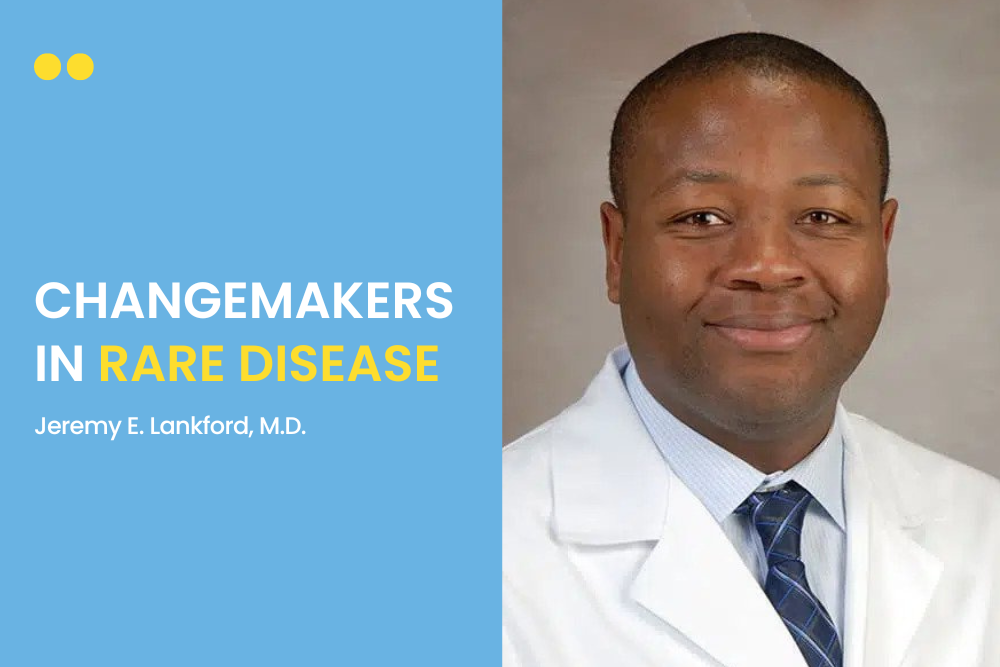
Changemaker bei Rare: Dr. Jeremy E. Lankford
At only four years old, Jeremy Lankford already knew that he wanted to be a neurologist. Today, that dream has come true, but what makes that reality even sweeter for the now-veteran physician is that his expertise is focused on improving the lives of kids just like that young version of himself.

Changemaker in Rare: Mary Kay Koenig, M.D.
Dr. Mary Kay Koenig is a physician with many interests, from chemistry to neurology to children's care—but at the beginning of her medical career, she never could have guessed that mitochondrial medicine would be the specialty where all of her passions intersected.

Bob Coughlin: Mutig auf der Suche nach Heilmitteln
Bob Coughlin, who today serves as an advisor to life science companies, was never one for thinking small or limiting his ambitions for rare disease patients. Learn how he and his family overcame the obstacles of cystic fibrosis (CF), raising awareness and money to search for a cure.

Changemaker bei Propionsäure- und Methylmalonsäureazidie: Kimberly Chapman, MD, PhD
Dr. Chapman is a leading expert in PA and serves as the director of the mitochondrial disorders clinic at Children’s National. Learn more about Dr. Chapman’s work, and why she feels that clinical trials are a crucial pathway to rare disease therapies.

Organisation im Fokus: Die Organic Acidemia Association
The Organic Acidemia Association is a non-profit organization whose mission is to empower families and health care professionals with knowledge in organic acidemia metabolic disorders. Learn more about their patient registry, a new Metabolic balancer app, and their newborn screening resources.